


There’s a real difference between a dentist who is comfortable treating children and a dentist who has spent years specialising in exactly that.
Most parents don’t know this distinction exists — and understandably so. From the outside, a dental appointment for a child can look similar regardless of who’s doing it. But what happens in the room, how anxiety is managed, and how long-term oral health is shaped, can vary enormously depending on the clinician’s training and experience.
At Core Dental, we believe children deserve care that is built around them — not just adapted from adult care. That’s why three of our Melbourne locations have specialist paediatric dentists on-site.
What makes a paediatric dentist different?
A specialist paediatric dentist isn’t simply a general dentist who sees a lot of young patients. After completing a five-year dental degree, a paediatric dentist undertakes a minimum of three additional years of specialist training, entirely focused on child and adolescent oral health. To use the title “Specialist Paediatric Dentist” in Australia, they must be registered with AHPRA (the Australian Health Practitioner Regulation Agency) as a specialist — the same rigorous pathway that governs surgical and medical specialists.
That additional training covers a lot of ground. Paediatric dentists learn child psychology and behaviour management at a clinical level. They understand how children’s teeth develop, how primary (baby) teeth influence the growth of adult teeth, and how to recognise early signs of issues — orthodontic, developmental, or otherwise — before they become significant problems. They’re also trained in techniques to treat very anxious children, children with special needs, or children who need dental work under sedation or general anaesthetic.
This isn’t a subtle difference. A skilled paediatric specialist can often complete a procedure in a way that feels low-stress to the child, using communication techniques and pacing that simply aren’t taught in general dental training. The goal is not just the dental work itself — it’s shaping how a child feels about dental visits for the rest of their life.
Why the first visit matters so much
Every adult who says “I’m terrified of dentists” usually traces that feeling back to a bad experience in childhood. The opposite is also true: adults who are relaxed and proactive about their dental health often had early experiences that felt safe and positive.
This is one reason Core Dental places such emphasis on getting children’s dentistry right from the start. When a child’s first experiences at the dentist are calm, gently paced, and genuinely child-friendly, it builds a foundation of trust — not just with their current dentist, but with dental care in general.
Our paediatric specialists are experienced at what the dental profession calls “tell-show-do” — explaining in child-appropriate language what’s going to happen, showing the instruments and what they do, and then proceeding slowly and reassuringly.
This sounds simple, but it requires genuine skill and patience, and it works. Even children who arrive anxious or distressed can often leave feeling surprisingly okay about the whole thing.
What to expect at a child’s appointment
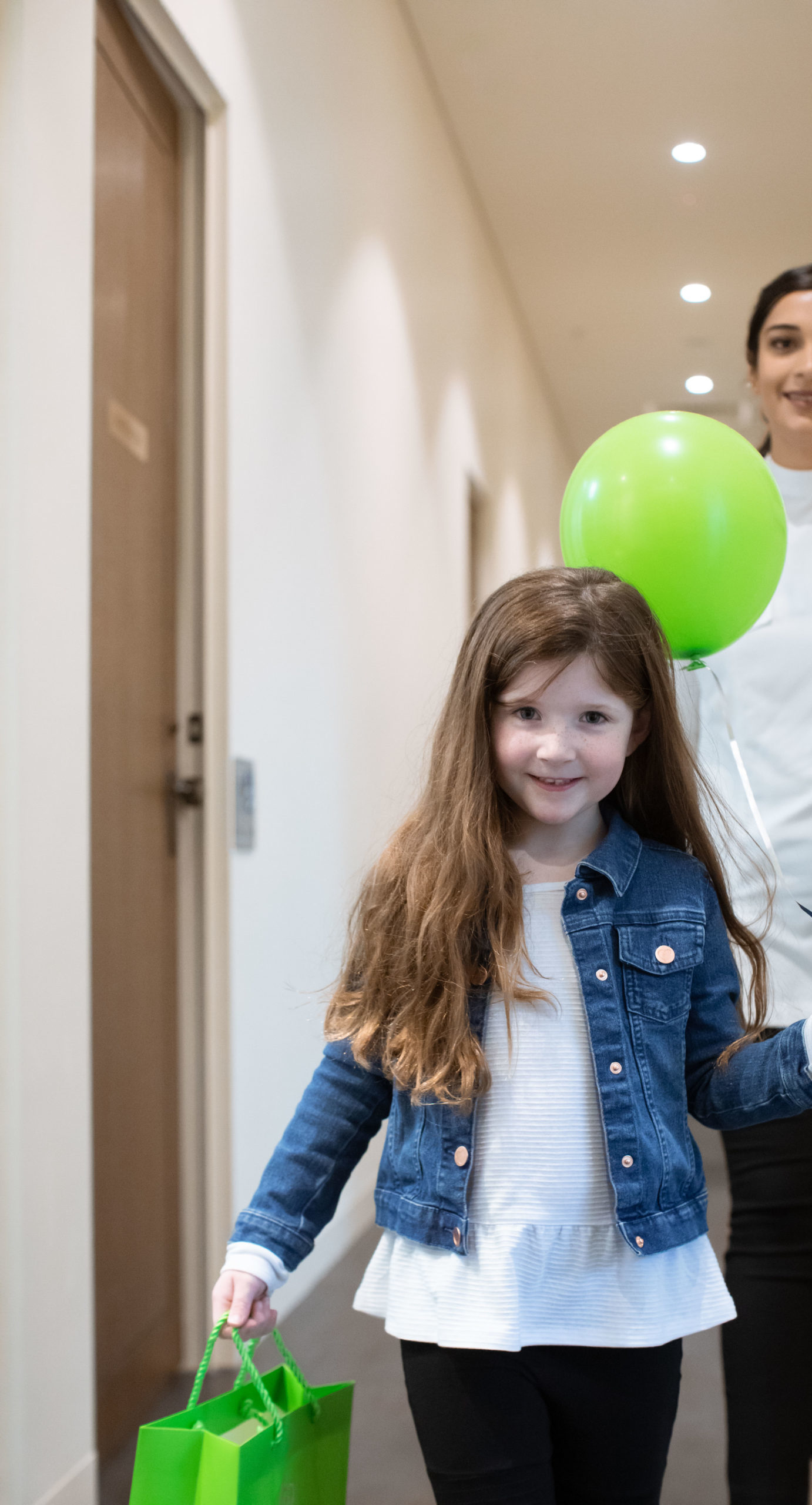
For most children, a first visit to a paediatric dentist is simply about familiarisation. There’s no rush to get through a list of procedures. The goal is to let the child get comfortable with the environment, the sounds, the chair, and the clinician. Parents are always welcome in the room and encouraged to be part of the experience.
Routine check-ups, cleans, fluoride treatments, and X-rays are typically very straightforward for children who attend regularly. For children who need restorative work — fillings, extractions, or management of decay — the paediatric specialist has the training to approach these procedures in ways that minimise distress and maximise cooperation.
If a child has significant dental needs and there are concerns about managing their anxiety in a conventional setting, our paediatric dentists can advise on options including conscious sedation or referral for general anaesthetic treatment where appropriate. These pathways exist precisely because one approach doesn’t suit every child.
Baby teeth matter more than most parents realise
One of the most common misconceptions about children’s dentistry is that baby teeth don’t matter much because they’ll fall out anyway. In reality, primary teeth are critically important. They hold space for adult teeth, guide their eruption, help children eat and speak properly, and their health directly influences the health of the adult teeth forming beneath them.
Decay in baby teeth, left untreated, can be painful, can spread, and can affect permanent teeth before they’ve even emerged. Managing a child’s diet, fluoride exposure, and oral hygiene habits in the early years is genuinely preventive medicine — it shapes their oral health trajectory for life.
Our paediatric specialists are proactive about this. Beyond treating problems when they arise, they partner with families to build good habits, answer parenting questions about diet and bottles and dummies, and guide children through the different stages of dental development with appropriate check-ins along the way.
Core Dental as a group: seamless pathways from childhood onward
Because Core Dental operates as a connected group across all our Melbourne locations, a child who sees a specialist paediatric dentist in one location can eventually transition seamlessly to an orthodontist, general dentist, or other specialist within the group, with their complete dental history already available. No starting from scratch, no lost information, no re-explaining of background.
This kind of continuity matters. Dental care that follows a patient from childhood through adolescence and into adulthood, with consistent records and a coordinated team, simply delivers better outcomes.
If you have children and you’re looking for a dentist who is genuinely trained to see them — not just willing to — we’d love to hear from you.